Digital Breadcrumbs: How Your 'New Car' Post is a Gift to Syndicates
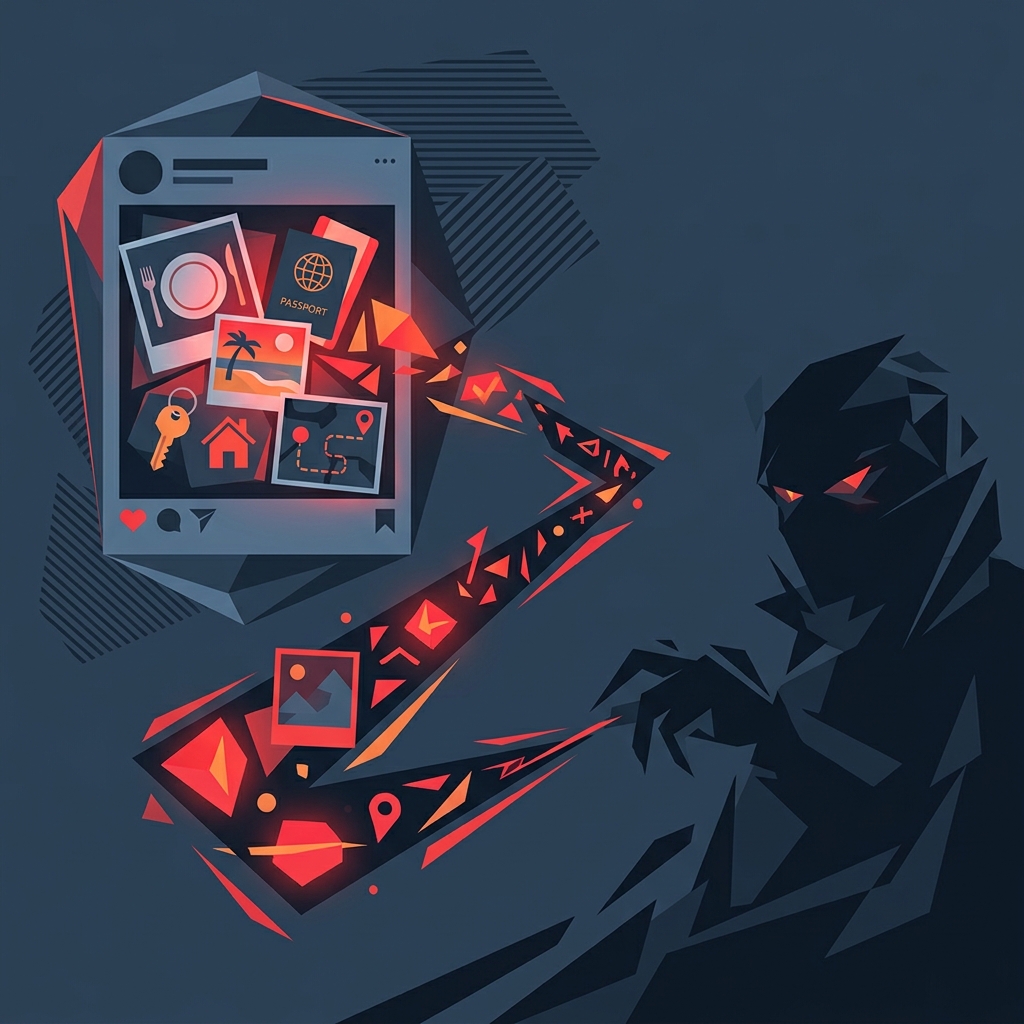
You posted a photo of your new car. A VW Polo, white, parked in your driveway. You're proud. You should be. But here's what a criminal syndicate sees in that one photo:
- Your house number is visible in the background.
- The street name sign is partially readable.
- The car's registration plate is fully visible.
- The photo metadata contains GPS coordinates accurate to within 5 metres.
- Your profile says you work in Sandton — that's a 35-minute commute on the N1.
- Your posts from last month show gym check-ins at 6am on weekdays.
They now know: what you drive, where you live, where you work, and when your house is empty. That single post is a hijacking or home invasion briefing document.
The Five Posts That Get You Targeted
These are the posts that criminal intelligence teams actively search for. They are all things that South Africans post daily without a second thought:
1. "New Car!" / "New Wheels!"
What you see: celebration. What they see: target identification. The vehicle make, model, colour, and registration are all they need to track you. Combined with your location data, they know where to find it. Hijacking syndicates in Gauteng use social media searches as a primary sourcing method for specific vehicle models that are in demand for parts or export.
2. "Off on Holiday! 🏖️"
Real-time vacation posts tell criminals: your house is empty, your car is either at home (burglary target) or at the airport (long-term parking theft target), and you won't be back for a specified number of days. Post your holiday photos after you return. Not during. Not before.
3. "Just Moved In!" / "New House!"
Photos of your new home reveal the property layout, the type of security (or lack thereof), the number of entry points, and the general affluence of the area. You are also establishing that you are unfamiliar with the neighbourhood — you don't know your neighbours yet, you haven't established routines with your security company, and you haven't identified the area's risk patterns.
4. "Payday!" / "Big Deal Closed!" / "Bonus Time!"
Any post that signals sudden wealth — cash, new purchases, business success — elevates your risk profile. Express kidnappings in South Africa are increasingly linked to digital profiling of perceived financial capacity. The criminals want to know: can this person pay?
5. School and Child Posts
Photos in school uniforms identify the school. Check-ins at sports events establish your child's schedule. "First day of school" posts with the school gate visible in the background provide physical intelligence. For ransom-motivated kidnappings, children of identifiably affluent parents are primary targets.
What the Criminals Actually Do With This
This is not theoretical. Here is the documented intelligence chain:
- Sourcing: A syndicate needs a specific vehicle — say, a white Toyota Fortuner. They search Facebook Marketplace, Instagram hashtags (#newcar #fortuner), and public posts in Gauteng area groups.
- Profiling: They find your post. From your profile, they get your name. From your friends list, they confirm your social circle and family. From your check-ins, they get your regular locations.
- Surveillance: Using your home location and work location, they can physically surveil your route. They are looking for the "choke point" — the quiet intersection, the slow gate opening, the isolated parking lot.
- Execution: The hijacking or home invasion is planned around your schedule, your route, and your known habits. It is not random. It was planned using information you provided freely.
A "Like" on Facebook becomes a "Follow" on the N1. This is the core of the "phygital" threat. Your digital footprint is the first phase of physical crime. Every piece of information you publish is intelligence that can be weaponised.
The Fix: 5 Rules for Social Media OPSEC
OPSEC — Operational Security — is a military concept that means controlling what information your adversary can gather about you. For South Africans in 2026, it's a survival skill:
- Delay, don't deny. You don't have to stop posting. Just delay. Post about the new car a week later, from a different location, with the plate cropped out. Post holiday photos after you return. The celebration still happens — the intelligence window closes.
- Strip metadata. Before posting any photo, strip the EXIF data. On iPhone: take a screenshot of the photo and post the screenshot (screenshots don't carry GPS data). On Android: use a free EXIF remover app. This removes the GPS coordinates embedded in your images.
- Audit your visibility. Log out of Facebook and search for your own name. What can a stranger see? If your profile photo, friends list, and posts are all public, you are an open book. Lock it down: Settings → Privacy → change everything to "Friends Only."
- Think before tagging. When you tag someone in a post, you are sharing their location and association with you — without their consent. Ask before tagging. Especially with children.
- Separate your audiences. Use Facebook's "Close Friends" feature for personal posts. Use Instagram's "Close Friends" for stories. Keep your public profile professional and boring. The public version of you should be as uninteresting as possible to criminals.
The golden rule: Before you post anything, ask: "Would I put this information on a notice board outside my front gate?" If the answer is no, don't put it on the internet. Because on the internet, it's on a notice board that 25 million South Africans can see.
Stay safe. Stay boring online. Save the celebrating for behind closed doors.